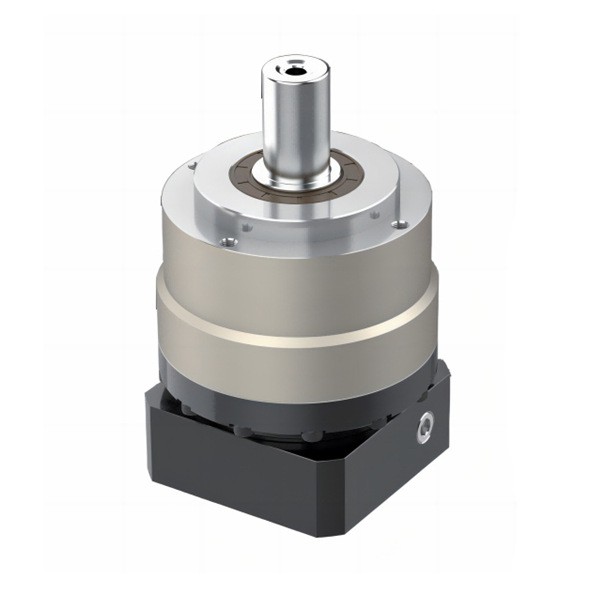
What Is Helical Planetary Reducer


Helical planetary reducer are high-performance gearboxes that are widely used in the fertilizer, printing, and earth-moving industries. They also find applications in the steel, rolling mills, power and port industries, etc. They are known to work at 98 percent efficiency, which is second only to planetary gearboxes. Helical planetary reducer are provided with teeth that are oriented at an angle to the shaft. Depending on their need for applications, helical planetary reducer come in different configurations. There are single helical gears, double helical gears, and herringbone gears – each one varying in terms of the number and alignment of the gears.

  • WAD High Precision Planetary Gearbox

    High efficiency: transmission efficiency is as high as 97% or more;Low noise: exquisite design, precision manufacturing, noise is less than 63dB (A);High input speed: the maximum input speed can

  • WAE Planetary Gearbox

    High efficiency: transmission efficiency is as high as 97% or moreLow noise: exquisite design, precision manufacturing, noise is less than 63dB(A)High input speed: maximum input speed can reach 10000

  • WAT Planetary Gearbox

    The design software of the top-level spiral bevel gear is adopted. The contact tooth surface load is designed to allow high torque output. The gear is made of high-strength carburized alloy steel,

  • WADR Planetary Gearbox

    High efficiency: transmission efficiency is as high as 97% or moreLow noise: exquisite design, precision manufacturing, noise is less than 63dB(A)High input speed: maximum input speed can reach 10000

  • WAER Planetary Gearbox

    High efficiency: transmission efficiency is as high as 97% or moreLow noise: exquisite design, precision manufacturing, noise is less than 63dB(A)High input speed: the maximum input speed can reach

  • WVRB Planetary Gearbox

    High efficiency: transmission efficiency is as high as 97% or moreLow noise: exquisite design, precision manufacturing, noise is less than 63dB (A)High input speed: the maximum input speed can reach

  • WVRBR Planetary Gearbox

    High efficiency: transmission efficiency is as high as 97% or moreLow noise: exquisite design, precision manufacturing, noise is less than 63dB (A)High input speed: the maximum input speed can reach

  • PGH Planetary Reducer

    High precisionHigh rigidityhigh torque

  • PHL Planetary Reducer

    High precisionHigh rigidityHigh torque

  • PHF Planetary Reducer

    High precisionHigh rigidityHigh torque

  • ZPGH Planetary Reducer

    High precisionHigh rigidityHigh torque

Advantages of Helical Planetary Reducer


The essence of helical teeth: A smoother, quieter engagement

At the heart of the distinction between helical and spur gearboxes lies the geometry of their teeth. Spur gears, characterized by their straight, parallel teeth, engage abruptly, generating a sudden impact that translates into noise and vibration. In contrast, helical planetary reducer possess teeth cut at an angle, resembling a ramp. This angled design facilitates a gradual engagement, akin to rolling up an incline, resulting in a noticeably smoother, quieter operation.


Harnessing the power of overlap: Enhanced load capacity and reduced wear

Beyond their harmonious engagement, helical planetary reducer boast a structural advantage over their spur counterparts: Increased overlap. This overlap refers to the extent to which the teeth of two gears mesh together, providing a broader area for load distribution. Consequently, helical planetary reducer can withstand greater torque loads without succumbing to premature wear or tooth breakage.


Precision in motion: Minimizing errors for unparalleled accuracy

The inherent stability of helical planetary reducer extends to the realm of precision. The oblique orientation of their teeth minimizes axial thrust, a force that tends to push gears along their shafts, introducing errors and compromising positioning accuracy. This reduced axial thrust, coupled with the smoother engagement of helical teeth, translates into a more precise and reliable transmission of motion.


A testament to durability: Withstanding the rigors of time

The superior performance of helical planetary reducer extends beyond their immediate operation, encompassing their long-term durability. The reduced noise and vibration, coupled with the enhanced load capacity and precision, contribute to a significantly extended lifespan compared to spur gearboxes. Helical planetary reducer are less prone to wear and tear, ensuring years of dependable operation in demanding environments.


Why Choose Us


Our product
Harmonic reducers, harmonic rotary actuators, humanoid robot joints, precision RV reducers, robot RV reducers, precision planetary reducers, precision worm gear reducers, precision cycloid reducers, four series of reducers, hollow rotary platforms, electric cylinders, four- and five-axis CNC indexing turntables, frameless torque motors, robot gear racks, etc.


Production equipment
The company has CNC machining centers, four-axis and five-axis CNC, CNC lathes, ordinary lathes, turning and milling composites, gantry machining centers, wire cutting, EDM, grinding machines, etc.


Production market
Our reducer is in a leading position in the Chinese market with the sales volume ranking among the top in East China.


Our service
Providing pre-sales technical support, model selection, technology and business docking, product model drawings, technical parameter information, and product factory testing.


Basic Knowledge of Helical Planetary Reducer Introduction
 

As you might expect from their different mesh geometries, spur and helical gears have very different loading characteristics. With their zero helix angle, spur gears lack an axial load component. And they suffer from very little sliding tooth contact. Helical gears, by contrast, generate significant axial forces in the gear mesh. They also exhibit more sliding at the point of tooth contact, adding friction forces into the mix. Helix angles in gearboxes usually fall in a range of 15 to 30 degrees. As the angle increases, both the axial forces and sliding contact increase.The main reason for using helical gears is the increased number of teeth in contact at any given time, which is a fundamental requirement for smooth torque transmission. With their increased contact ratio compared to spur gears, helical gears have a lower fluctuation of the gear mesh stiffness.


Since they don't need to withstand any axial forces, spur gear bearings play just a supporting role in the functioning of the gearbox. The bearings simply need to support the rotating gear shafts, but they do not play an active role in torque transfer. The presence of axial forces makes things very different for the bearings that support helical gears. But it's important to make a distinction between fixed-axis and planetary gearboxes. In fixed-axis gearboxes, the additional axial forces amount to little more than an inconvenience. Gearbox designers will often upsize the bearings to accommodate the additional forces. Or, in extreme cases, they may select angular contact or tapered roller bearings, both of which are designed to withstand axial loads.


In planetary gearboxes, however, it's much more difficult to design around these axial forces for two related reasons. First, there is typically very little room in a planetary gearbox to incorporate the kind of bulky bearings that can tolerate high axial forces. Second, the planet gear bearings need to play an active role in torque transfer. Planetary systems split the torque input from the sun gear amongst the planet gears, which in turn transfer torque to a planet carrier connected to the gearbox output. The bearings that support the planets on the carrier have to bear the full brunt of that torque transfer.


Applications of Helical Planetary Reducer


Helical planetary reducer are widely used across industries and are a preferred gear type due to the noise reduction it offers. For instance, in the automobile industry, helical gears are used for forwarding speeds. You can see the difference for yourself. Have you noticed the sound a manual transmission automobile makes when driven in reverse? This is because spur gears are used for reverse action in an automobile. Helical Gearboxes are used for forwarding movement and hence the noise is considerably low. Helical planetary reducer are suitable for applications where smooth and quiet operation is essential, including:


Conveyors
Used in material handling systems for their reliable performance.


Pumps and compressors
Ideal for industries requiring continuous operation.


Packaging machinery
Ensures precision and efficiency in packaging processes.


Automotive
Found in differential systems and other automotive components.

WAE Planetary Gearbox


Measuring The Dimensions Of Your Helical Planetary Reducer


To determine the size of your helical planetary reducer, you must first choose the proper shaft. There are three shaft orientations to choose from: Orthogonal, coaxial, plus parallel.


The input and output shafts of a helical planetary reducer are perpendicular if it has an axial shaft orientation. This is often the case with bevel and worm helical planetary reducers. In addition to industrial applications, orthogonal shaft alignment is employed in differential automobile bridges.


The inlet and outlet shafts of a helical planetary reducer are aligned if it has a coaxial shaft arrangement. This is true, for example, of planetary gearboxes or helical planetary reducers used during aeronautical engines and turboprop engines. The input and output shafts of a helical planetary reducer are parallel if it has a parallel shaft orientation.


Why Are Helical Planetary Reducer Essential for Industrial Usage?

A helical planetary reducer operates with the support of cylindrical gears. The teeth in these gears are not parallel to each other on the turning axis; instead, the aforementioned teeth are a part of a helix. This formation allowed the power to be transformed between either right or parallel angle axes.


Now you may wonder what the difference is between a and numerous other gearboxes. Essentially the helix created by the teeth gives the gearbox the ability to function quietly. The helical planetary reducer has the edge over all other gearboxes because it can transmit power more efficiently amidst two parallel shafts. There is also a significant reduction in the average wear and tear as the multiple teeth distribute power much more evenly.


Almost all notable producers of superior quality, industrial-grade gearboxes recommend the helical planetary reducer to their clients and consumers. They are ideal for operation under heavy power efficiency and silent operation (automotive systems).


Helical Planetary Reducer Maintenance


Regular inspection
Regularly inspect the helical planetary reducer for any signs of wear or damage. Check for leakages of lubricating oil and make necessary repairs. Verify the alignment of the gears and bearings to prevent misalignment issues. Monitor the temperature of the reducer during operation and investigate any abnormal rise in temperature. Inspect the housing and seals for any signs of deterioration or leakage.


Lubrication
Follow the manufacturer’s guidelines for lubrication intervals and use the recommended lubricant. Ensure proper lubrication of all gears, bearings, and seals. Regularly check the oil level and top up if necessary. Monitor the condition of the lubricating oil and change it at the recommended intervals. Use high-quality lubricants that are suitable for the operating conditions of the gear reducer.


Gear inspection
Inspect the gears for wear, pitting, or chipping. Measure gear backlash and ensure it is within the recommended range. Check gear tooth contact patterns and adjust if necessary. Replace any damaged or worn gears promptly. Monitor the gear’s performance and noise levels during operation.


Bearing maintenance
Regularly inspect the bearings for any signs of wear, overheating, or abnormal noise. Lubricate the bearings as per the manufacturer’s recommendations. Replace worn-out or damaged bearings with new ones of the same specification. Ensure proper alignment and seating of the bearings.


Seal inspection
Check the seals for any signs of damage or leakage. Replace damaged or worn seals promptly. Ensure proper alignment and seating of the seals. Use high-quality seals suitable for the operating conditions.


Noise and vibration analysis
Monitor the gear reducer for excessive noise or vibration during operation. Conduct a detailed analysis to identify the root cause of any abnormal noise or vibration. Take corrective actions based on the analysis results to eliminate or reduce the noise and vibration.


Alignment
Regularly check the alignment of the gear reducer with the connected shafts or equipment. Use precision alignment tools to ensure accurate alignment. Adjust the alignment if any deviations are found to prevent gear misalignment and premature wear.


Overload protection
Install suitable overload protection mechanisms to prevent excessive torque or load on the gear reducer. Regularly inspect and test the overload protection devices to ensure their proper functioning. Upgrade or replace the overload protection system if necessary.


Cooling and ventilation
Ensure adequate cooling and ventilation for the gear reducer to prevent overheating. Clean the cooling fins and ensure proper airflow. Install additional cooling mechanisms if required for high-temperature applications.


Emergency preparedness
Develop an emergency response plan to handle unforeseen breakdowns or failures. Keep spare parts readily available for quick replacements. Establish a reliable communication channel for reporting emergencies.


Helical Planetary Reducer Market Size


The helical planetary reducer market refers to a segment within the broader gearbox industry that specializes in the production and distribution of helical planetary reduceres. These gearboxes are mechanical devices used to transmit power from one component to another within a system, employing a combination of helical and planetary gear arrangements. The inline configuration allows for efficient power transmission while the planetary design offers compactness and versatility. These gearboxes find applications across various industries, including manufacturing, automotive, aerospace, and robotics, where precise and reliable power transmission is crucial.


Opportunities in this market stem from the growing demand for automation and machinery across industries, driving the need for high-performance gear systems. Additionally, advancements in materials and manufacturing processes are enhancing the efficiency and durability of helical planetary reduceres, expanding their applicability in demanding environments.


Segmentation of the helical planetary reducer market can be based on several factors, including end-user industry, gearbox size and capacity, and geographical regions. Industries such as automotive, packaging, food processing, and material handling are major segments driving the demand for these gearboxes due to their widespread use in conveyor systems, lifting equipment, and production machinery. Within these industries, the segmentation may further differentiate based on specific applications and performance requirements.


Geographically, the market can be segmented into regions experiencing rapid industrialization and infrastructure development, where the adoption of advanced machinery and automation solutions is on the rise. Furthermore, segmentation based on gearbox size and capacity caters to diverse customer needs, ranging from small-scale applications in robotics to heavy-duty industrial processes requiring high torque and power transmission capabilities. Overall, the helical planetary reducer market offers opportunities for manufacturers to innovate and address the evolving demands of modern industrial applications with efficient and reliable power transmission solutions.


The helical planetary reducer market is poised for substantial growth in the coming years, driven by several key strategies and factors.


Market players are increasingly focusing on product innovation and development to meet evolving consumer demands and preferences.


Expansion into emerging markets and strategic partnerships or collaborations are also pivotal strategies for market growth. Additionally, investments in research and development to enhance technological advancements and improve product quality play a vital role. Moreover, the market's future scope looks promising due to the rising adoption of digitalization and the integration of advanced technologies, which are anticipated to open new avenues for growth and innovation.


Our factory

SIP Gears Intelligent Co.,Ltd is a technical production service provider focusing on industrial automation and robot-related fields with rich experience. The company holds core patents of reducers, providing customers with complete industrial automation solutions and entering the field of mechanical transmission from a high starting point. We focus on the research and development of high-precision reducers and joint module rotary actuators, and is committed to building a leading brand of reducers both in domestic and abroad. Harmonic reducers, harmonic rotary actuators, humanoid robot joints, precision RV reducers, robot RV reducers, precision planetary reducers, precision worm gear reducers, precision cycloid reducers, four series of reducers, hollow rotary platforms, electric cylinders, four- and five-axis CNC indexing turntables, frameless torque motors, robot gear racks, etc.

productcate-1-1


FAQ

Q: What is a helical planetary reducer?

A: A helical planetary reducer is a type of gear reducer that uses helical gears in a planetary configuration to achieve speed reduction and torque multiplication in various industrial applications.

Q: Are there different mounting options available for helical planetary reducers?

A: Yes, helical planetary reducers can be mounted in various ways, including horizontal, vertical, flange mount, foot mount, and shaft mount configurations, to accommodate different installation requirements and space constraints.

Q: Can helical planetary reducers be used in precision positioning applications?

A: Yes, helical planetary reducers can be used in precision positioning applications by providing accurate speed control, high torque output, low backlash, and repeatability for tasks such as CNC machining, robotics, and automated assembly systems.

Q: How do helical planetary reducers compare to other types of gear reducers?

A: Helical planetary reducers offer advantages over other types of gear reducers, such as higher efficiency, smoother operation, compact design.

Q: How does a helical planetary reducer work?

A: A helical planetary reducer works by transmitting power from the input shaft to the output shaft through a system of helical gears arranged in a planetary gearset, providing efficient speed reduction and high torque output.

Q: What are the key components of a helical planetary reducer?

A: The key components of a helical planetary reducer include the sun gear, planet gears, ring gear, carrier, input shaft, output shaft, bearings, housing, and helical gears, which work together to transfer power smoothly and accurately.

Q: What are the advantages of using a helical planetary reducer?

A: The advantages of using a helical planetary reducer include high efficiency, low noise, compact size, high torque density, smooth operation.

Q: Where are helical planetary reducers commonly used?

A: Helical planetary reducers are commonly used in robotics, automation, machine tools, conveyors, packaging machinery, and other industrial applications that require precise speed control, high torque output, and compact design.

Q: Can helical planetary reducers be customized for specific applications?

A: Yes, helical planetary reducers can be customized for specific applications by selecting the appropriate gear ratios, output configurations, mounting options, lubrication methods.

Q: How do you select the right helical planetary reducer for an application?

A: Selecting the right helical planetary reducer involves considering factors such as input speed, torque requirements, duty cycle, mounting space, backlash tolerance, environmental conditions, and budget constraints to ensure optimal performance.

Q: How do you install and align a helical planetary reducer?

A: Installing and aligning a helical planetary reducer involves mounting the reducer securely, aligning the input and output shafts, checking for proper lubrication.

Q: Are there different types of lubrication methods for helical planetary reducers?

A: Yes, different types of lubrication methods can be used for helical planetary reducers, including grease lubrication, oil bath lubrication, oil mist lubrication, and sealed-for-life options, depending on the application requirements.

Q: Can helical planetary reducers be used in high-speed applications?

A: Helical planetary reducers can be used in high-speed applications by selecting the appropriate gear ratios, bearings, and lubrication methods to ensure reliable operation and precise speed control at elevated speeds.

Q: What maintenance requirements are needed for helical planetary reducers?

A: Maintenance requirements for helical planetary reducers may include periodic inspection for wear, lubrication of gears and bearings, cleaning of components, alignment checks.

Q: How do helical planetary reducers contribute to energy efficiency?

A: Helical planetary reducers contribute to energy efficiency by reducing power losses through efficient helical gear designs, optimized lubrication methods, and precise motion control, resulting in lower energy consumption and improved system performance.

Q: Can helical planetary reducers be used in cleanroom environments?

A: Helical planetary reducers can be used in cleanroom environments with proper sealing, lubrication, and material selection to prevent contamination and ensure reliable operation in controlled environments with strict cleanliness requirements.

Q: What safety features are incorporated into helical planetary reducers?

A: Safety features incorporated into helical planetary reducers may include overload protection, torque limiters, emergency stop mechanisms, position feedback sensors.

Q: How do you troubleshoot common issues with helical planetary reducers?

A: Common issues with helical planetary reducers, such as noise, vibration, overheating, or performance inconsistencies, can be troubleshooted by inspecting components, checking alignment, adjusting lubrication, and consulting with a technical expert for assistance.

Q: How do helical planetary reducers handle shock and vibration?

A: Helical planetary reducers are designed to handle shock and vibration by incorporating features such as precision helical gears, rigid housings, anti-friction bearings.

Q: What are the temperature limits of helical planetary reducers?

A: The temperature limits of helical planetary reducers depend on the materials and lubricants used in their construction and can range from -10°C to 80°C or higher, with special designs available for extreme temperature environments.

We're professional helical planetary reducer manufacturers and suppliers in China, specialized in providing high quality customized service. We warmly welcome you to buy helical planetary reducer in stock here from our factory. For price consultation, contact us.

wad high precision planetary gearbox, zpgh planetary reducer, wvrbr planetary gearbox

Send Inquiry